
Second-Screen Football: How Asian Fans Really Watch European Matches
Written by Vivien Lee
February 4, 2026 | 2:30 pm GMT+8
In 2026, watching European football in Asia isn’t about just watching a match.
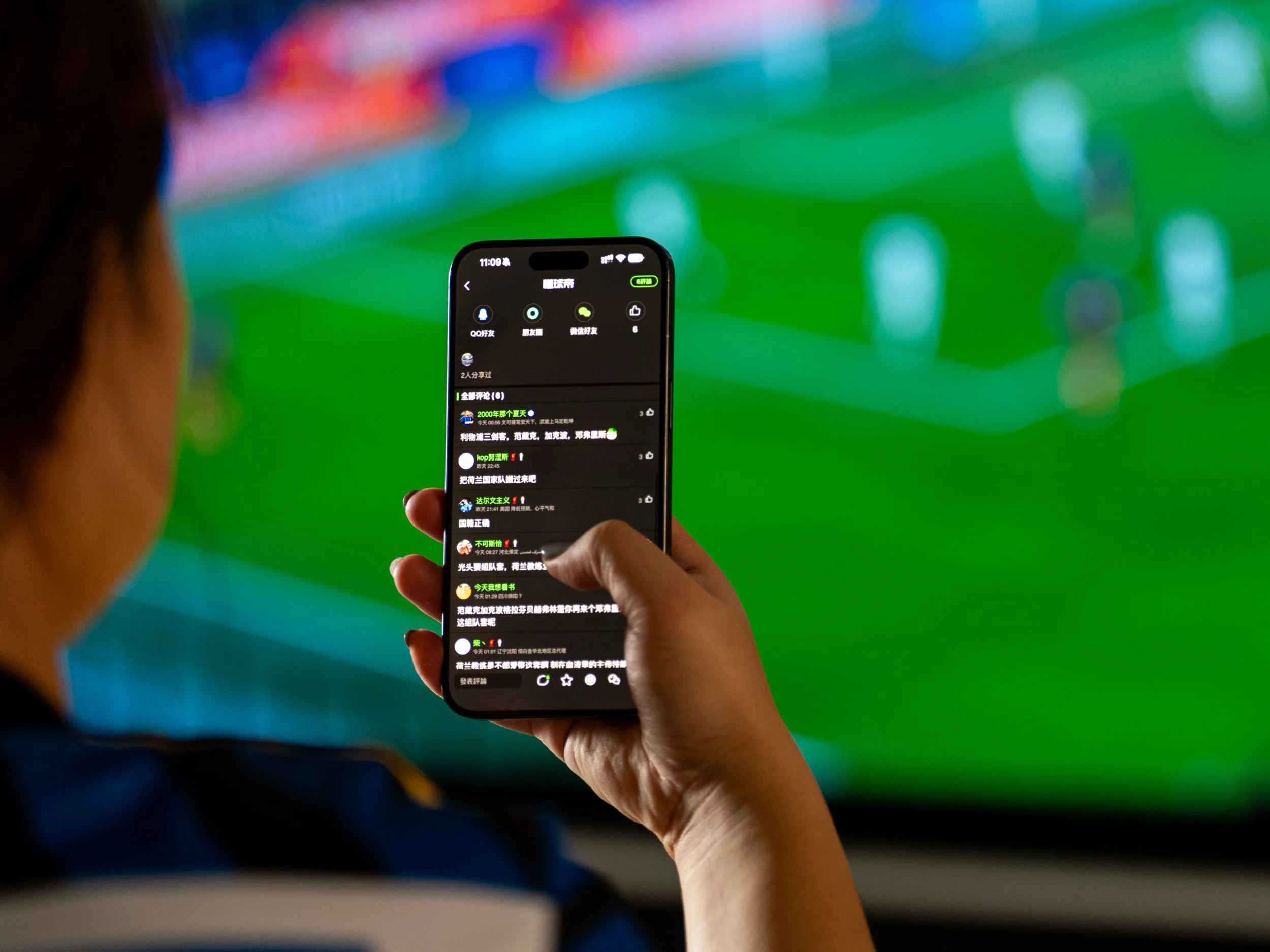
For many fans, the game on TV is only half the experience. The rest happens on their phones — in buzzing group chats, comment feeds, clipped highlights, and running jokes shared in real time. The match triggers the reaction. The reaction is where the real meaning takes shape.
This isn’t new, but its importance has completely changed. Across much of Asia, the second screen isn’t a side show anymore. It’s the place where football is actually talked into existence.
The Match Is the Spark
Asian fans don’t follow games minute-by-minute in a vacuum. Attention spikes around moments, not phases of play.
Goals matter, of course. So do missed chances, questionable refereeing calls, halftime takes, and full-time arguments. These moments travel instantly — clipped, memed, debated, exaggerated. Those long stretches of possession don’t.
What counts isn’t how much content is out there, but when it appears. Timing beats volume every time.
Different Markets, Different Screens
There is no single way Asian fans use a second screen.
In Japan, the live reaction unfolds on X and LINE. In China, conversation spreads across Weibo, Douyin, and Bilibili all at once. In Southeast Asia, most of the noise flows through Instagram, TikTok, and WhatsApp groups.
Each market has its own habits, rhythms, and pace. Treating Asia as one platform doesn’t work.
Reaction, Not Analysis
During the live match, second-screen behaviour isn’t about tactics or statistics. Nobody’s looking for breakdowns while the game is still playing out.
They’re reacting. Posting clips. Making jokes. Arguing over decisions. Picking sides.
This is football as a shared emotional pulse. Analysis can wait. Expression can’t.
Players Move Faster Than Clubs
On second screens, individual players travel further and faster than any club narratives.
A goal celebration, a mistake, a facial reaction — these moments spread quicker than any official storyline. Local heroes, Asian players abroad, and culturally familiar faces make this effect even stronger.
For clubs, this creates real momentum, but also volatility. Player-led attention is powerful, but it moves entirely on its own schedule.
What Clubs Often Miss
Second-screen behaviour in Asia can’t be treated as an add-on to broadcast coverage.
Match day doesn’t start at kick-off and end at full time. It unfolds in bursts, driven by emotion and shared reaction. Content that ignores this rhythm gets drowned out. Content that rides it goes everywhere.
The second screen isn’t competing with the match. In Asia, it’s where the match is argued, felt, and remembered.
European football provides the spectacle.
The second screen is where Asian fans make it their own.